



At the beginning of August, the Government released the Planning for the Future White Paper which introduces important changes in relation to the planning landscape. Alongside this there are also changes to the planning Use Classes from 1st September impacting commercial landlords and occupiers.
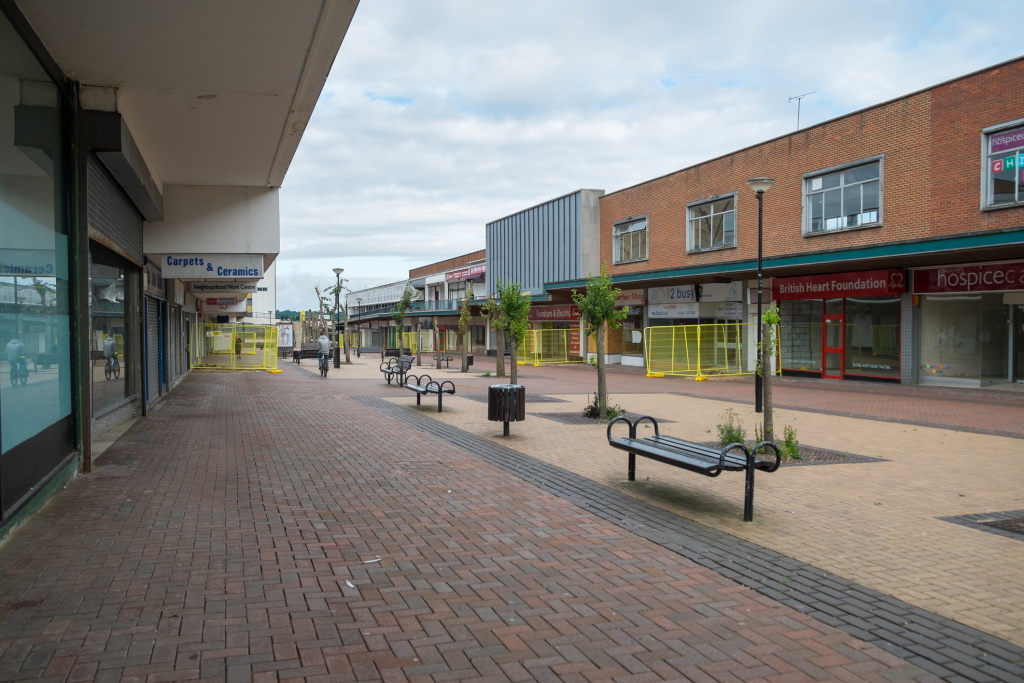
The changes create a new Use Class E ‘Commercial Business and Service’ which includes a wide range of uses such as retail, cafes, restaurants, offices, light industrial, gyms, health centres and nurseries. The overall aim is to allow more flexibility for commercial space, particularly on the high street, in an attempt to reinvigorate town centres.
The wider planning context also presents further opportunity for landlords and occupiers in considering the potential for alternative uses and additional floor area. Summarised below are some of the key recent planning changes and how these relate to the wider aspects of design and cost planning.
Detail of the Use Class Change
The Town and Country Planning (Use Classes) (Amendment) (England) Regulations 2020 (SI 2020 No.757) were introduced by Government on 20th July and took effect on 1st September 2020.
Key points:
- The eventual retiring of Classes A1, A2, A3, B1, D1 and D2 in favour of the new Class E.
- Introduction of Class F1 – Learning and non-residential institutions, and F.2 Local Community.
- See planning portal for the listed changes. https://www.planningportal.co.uk/info/200130/common_projects/9/change_of_use#:~:text=Changes%20to%20Use%20Classes%20from%201%20September%202020&text=Generally%3A,used%20to%20determine%20the%20application.
Good intentions?
The aim is to give greater flexibility and cut ‘red tape’. For example, vacant retail premises will now have a wide variety of alternative uses within the same Use Class E. A prospective tenant would therefore be able to sign up to a new lease with the comfort that their repurposing proposals will be viable from a planning perspective. Thereby avoiding the time, cost and uncertainty of an agreement for lease subject to planning and the application process.
Some obstacles are:
- Commercial occupational leases ordinarily limit the use of the subject property to a defined Use Class. It would be at a Landlord’s discretion to vary this in a continuing Lease agreement.
- There needs to be a balance between Landlords being able to protect their interest but also allowing flexibility. This could perhaps be achieved through the lease alteration provisions by ensuring a suitable and appropriate licence to alter and the monitoring of any alteration works to repurpose.
- Historic restrictive planning conditions have the ability to over-ride the flexibilities offered by Use Class E. It is always worth a discussion with the local authority to confirm the position.
- The new amendment to the Use Class Order is currently subject to legal challenge. Legal proceedings have been expedited, but there won’t be full clarity on whether the amendment succeeds until at least mid-October 2020.
Other Positive Steps
The Use Class changes are complimented by Permitted Development provisions for adding new residential floors to existing buildings and replacing redundant office buildings with new residential buildings in the same footprint/massing.
Residential blocks can have two-storey vertical extensions through a Prior Approval application, subject to the following:
- They need to be detached
- Purpose-built between 1948 and 2018
- Need to be three storeys or more above ground level
- No more than 30m high after the extension
In addition to the ordinary Permitted Development provisions to convert vacant offices to residential, there is a further opportunity for regeneration through demolition and residential redevelopment. This is still via Prior Approval but needs a full set of technical designs and supporting documentation. This Prior Approval does appear quite onerous but affords developers greater certainty on outcome than a full planning application route. It is subject to the following:
- Vacant and redundant free-standing buildings that fall within B1(a) offices, B1 (b) research and development, B1 (c) industrial processes (light industrial), and free-standing purpose-built residential blocks of flats (C3).
- Built before 1st January 1990 and have been entirely vacant for at least six full months.
This avenue allows for redevelopment of a single new building within the footprint of buildings up to 1,000 sq m, and with a maximum height of 18 metres. Furthermore, given that it is Permitted Development it does not currently attract section 106 or affordable housing obligations.
How can IW help?
Ingleton Wood can assist with the opportunities mentioned above by carrying out planning appraisals and development strategy as well as the design and application submissions themselves. Further to this, we can advise on feasibility option appraisals to repurpose vacant (and soon to be vacant) buildings to maximise future value, marketability and occupancy. Our feasibility options can consider the different uses in terms of the following:
- Planning appraisal and strategy
- Architectural design
- Structural implications
- Neighbourly matters analysis
- Energy/Sustainability strategy
- Budget cost assessments
Our aim is to allow clients to weigh up options and budget costs to ascertain the most appropriate future uses in terms of value either for disposal, proceeding with a project, or securing funding partners.
Given the excess in supply of retail resulting in falling rent and capital values, these planning changes will hopefully assist in the necessary readjustment by tailoring supply to demand. Despite some obstacles, the hope is that this set of planning changes will help create a wider and diverse mix of self-sustaining uses in town and city centres.
To discuss the above and specifics in your property portfolio please contact our commercial surveying and planning teams. Email commercial@ingletonwood.co.uk or call 020 7680 4400.


 General Enquiries
 Twitter
 LinkedIn
 Instagram