



Ingleton Wood
Our BrochuresContact UsWe are hiring
  • our practice
    • About us
    • Our Mission and Values
    • Our Story
    • Practice Management
    • Our sustainability commitment
    • Frameworks
    • The Armed Forces Covenant
    • Awards
    • Testimonials
    • Brochures
  • Our People
    • overview
    • Equality, Diversity and Inclusion
    • Life at Ingleton Wood
    • Careers
    • Apprenticeships
    • Supporting CPD
    • Benefits
    • How to join our practice
    • Our Partnership
      • John Dixon
      • Stuart Norgett
      • David Cresswell
      • Laura Mansel-Thomas
      • Paul Cavalier
      • Simon Gorst
      • Daniel Legg
      • Darren Fowler
      • Peter Webb
      • Max Chapman
      • Wesley Henderson
    • Our Senior Team
  • our services
    • Architecture
      • Concept and Feasibility
      • Masterplanning
      • Planning Applications
      • Detailed Design
      • Visualisation
    • Building Surveying
      • Drone Services
      • Project Work
      • Expert Witness
      • Surveys
      • Dilapidations
      • Repairs and Maintenance
      • Technical Due Diligence (TDD)
      • Party Wall and Neighbourly Matters
      • Reinstatement Cost Assessments
      • Development Monitoring
      • Cladding
    • Building Services Engineering
      • Mechanical Design
      • Electrical Design
      • Environmental Design
      • Surveys and Asset Registers
      • Management Services
      • Defence and Security
    • Planning
      • Planning Applications and Appeals
      • Planning and Development Appraisals
      • Development Plan Representations
      • Masterplanning
      • Public Consultation
      • Post Planning Services
    • Interior Design
      • Our Service
      • Our Expertise and Adding Value
      • Visualisation
    • Sustainability
      • Climate resilience
      • Sustainability in Planning
      • Regulation Compliance
      • Energy Strategies
      • Passivhaus
      • BREEAM and Code
      • Zero Carbon
      • Post Occupancy Evaluation
      • CPD and Research
      • Health and wellbeing
      • WELL certification
    • Civil Engineering
      • Planning Services
      • Flood Risk Assessment
      • Drainage Design
      • Sustainable Drainage
      • Highways
      • Enabling Works
      • External Works
    • Structural Engineering
      • Structural Design
      • Foundation Design
      • Basement and Retaining Wall Design
      • Timber Metal Frame Design
      • Structural Inspections
    • Quantity Surveying
    • Project Management
    • CDM and H&S Services
      • What is a CDM Advisor?
      • What is a Principal Designer?
      • Our CDM Service
      • What does a Client have to do?
      • Are you a Duty Holder?
      • Client and Contractors CDM CPD
      • H&S Services
    • The Building Safety Act
      • What is the Building Safety Act?
      • Does the Building Safety Act apply to all buildings?
      • What are the key changes to the Building Safety Act?
      • Changes to the Building Regulations
      • What does the Building Regulations Client have to do?
      • Who is the Accountable Person?
      • How do I prepare for Building Safety Act changes?
    • transport and infrastructure
      • Feasibility and Viability
      • Highway and Access Design
      • Travel Plans
      • Transport planning
  • our sectors
    • Arts and Culture
    • Bluelight
    • Commercial
      • Offices
      • Industrial
      • Retail
      • Telecoms
    • Defence
    • Education
      • Education Services
    • EV Hub Design Services
    • Fuel Filling Stations
    • Health
    • Heritage and Conservation
    • Laboratories
    • Leisure
    • Residential
    • Social and Community
  • our projects
  • news & socials

Energy certificates are ‘misleading’ tools for delivering zero carbon buildings Tuesday, 16th November 2021

Energy Performance Certificates (EPCs) are “misleading” indicators of zero carbon buildings and should no longer be used as official guides to help lower emissions, Ingleton Wood has warned.

We’ve conducted fresh analysis which shows actual carbon emissions for electrically heated buildings are around 60% lower than predicted by EPCs, mainly because EPC methodology uses carbon factors set by the 2013 Building Regulations rather than up-to-date figures.

According to Ofgem, over 2.1 million homes use electric heating. The change in the carbon factor has been dramatic as renewable technologies continue to make up more of the grid electricity mix while coal generation continues to fall.

An EPC report would today estimate a carbon footprint of 519kg per year for a typical electric heated home needing 1,000 kWh/yr of heating, our research found.

But that headline figure is based on the 2013 carbon factor set at 0.519 kgCO2/kWh. This has since fallen to around 0.212, meaning the carbon footprint is far more likely to be around 212kg per year – rather than 519kg – and more in line with gas (203kg).

Sustainability specialist Jason Page, who led the research, said: “Our research strongly suggests EPCs show figures distorted from reality.

“EPCs are a powerful tool in fighting climate change but they are now not only becoming worse at indicating building carbon emissions as the grid’s electricity moves towards renewable generation – they are becoming increasingly and actively misleading.

“In our real-life example of an electric heated home, an EPC would have mistakenly shown gas as having around half the carbon footprint of electricity.

“This seriously risks confusing homeowners and landlords, leading policymakers to incorrect conclusions, and discouraging the decarbonisation of heat away from fossil fuel systems because they appear to reach higher EPC ratings far more easily than electric heating.”

EPCs were introduced in 2007 to record a home’s energy efficiency rating from A to G, with E the lowest legal standard for tenants. EPC assessors recommend changes to lower the carbon footprint and energy bills. EPCs are also used to identify households in fuel poverty, with around 16 million homes in England (two thirds) currently rated D or worse.

As Britain steps up action on climate change, the government is placing greater emphasis on EPCs to help homeowners and landlords make improvements to cut energy use and their carbon footprint in support of UK net zero targets.

In September 2020, a government consultation found only 3% of industry respondents rated EPC reliability as “good”, with criticisms over energy usage and performance assessments.

Our analysis also found “significant discrepancies” between EPC ratings and zero carbon properties.

For example, in Essex, 178 homes have 100+ EPC ratings but 1,777 had a zero or better rating for carbon emissions per floor area. Of these, 72% were EPC rated A or B but eight, three and two were rated E, F and G respectively.

Jason added: “How can F and G homes be zero carbon? They were mostly period properties from the 1900s with wood log or pellet sourced heating and an assumed renewable source of energy.

“But it means zero-carbon properties can have a low EPC rating if you have the right combination of high cost and low carbon fuels in a high energy demanding property.

“While the next update to the Building Regulations, due imminently, may mean new EPCs are produced with carbon factors closer to reality, the decarbonisation of the electricity grid will mean EPC metrics will remain static and very soon be out of sync once more.

“EPCs were developed and continue to provide a static consistent comparison between properties, but as we seek to improve building performance in relation to achieving actual zero carbon ratings, we need to find a way to provide real-time data to continue to tackle the climate crisis.

“EPCs are not the correct tool for this job and I think a huge question mark hangs over whether we can trust EPC recommended improvements for cutting carbon emissions.”
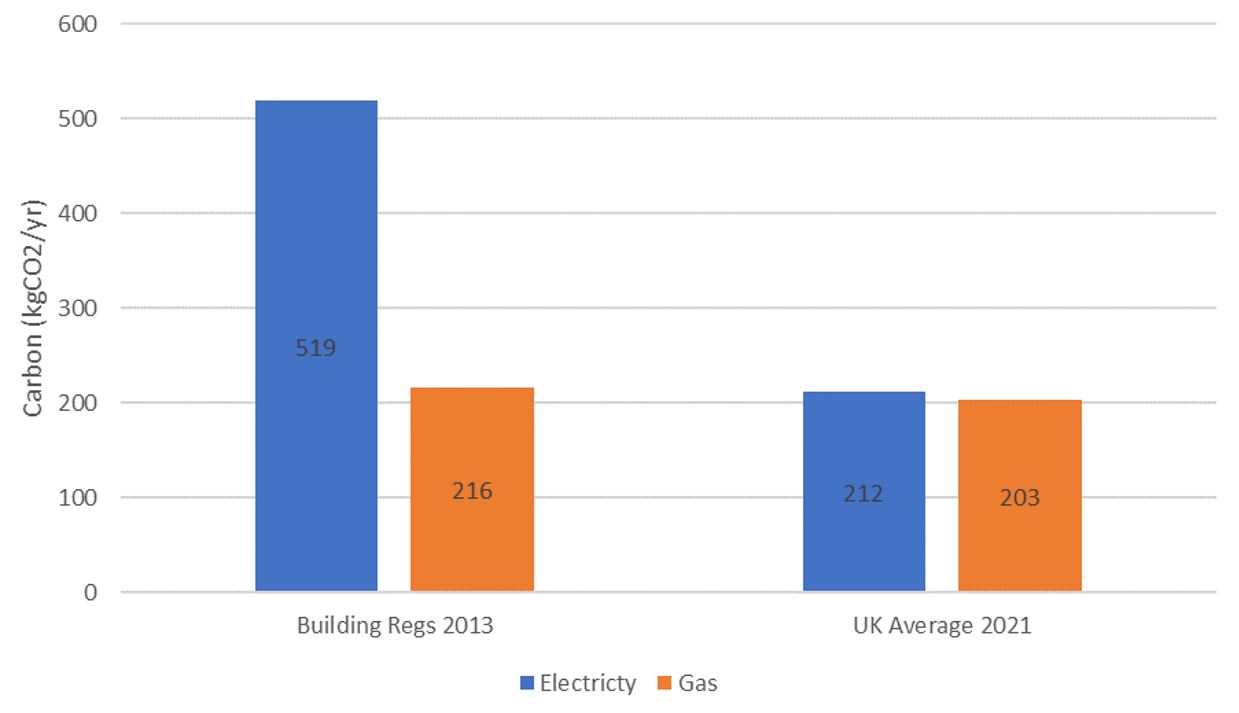
Ingleton Wood EPC Graph


XPinterestLinkedInEmailShare with other services

Related Links

Tags

#energycertificates#carbonzerobuildings#epc#sustainabilityspecialist#energyefficiency

Contact Us

MapLondonTelephone020 7680 4400
Billericay01277 637800
Cambridge01223 202040
Colchester01206 224270
Norwich01603 666847
Nottingham0115 8654072
Oxford01865 411475
  • Email General Enquiries
  • Email Business Development
  • Email Recruitment / HR
  • Email Health and Safety
  • Email Sustainability
  • Twitter Twitter
  • LinkedIn LinkedIn
  • Instagram Instagram

Ingleton Wood © 2025 | Ingleton Wood LLP is a Limited Liability Partnership registered in England and Wales with No. OC306572, registered address: The Loom, 14 Gower’s Walk, London, E1 8PY. VAT No. 262 7242 10 |

Sitemap | Cookies Policy | Privacy Notice | Disclaimer

This website uses cookies; some may have already been set.

To remove this message, please choose whether to approve, customise or reject the site's use of cookies; your choice will be saved in a cookie. If you would prefer the site to not use cookies at all then please block or otherwise disable cookies in your web browser, though you may find that this prevents certain parts of the site from working correctly.

You can view our cookie policy at the following page: Cookies Policy.